paulista
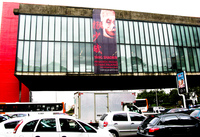
The museum is a non-profit making private institution founded in 1947 by Assis Chateaubriand and Pietro Maria Bardi. MASP distinguished itself for many important initiatives concerning museology and art education in Brazil, as well as for its pioneer role as a cultural center. It was also the first Brazilian museum interested in Post-World War II artistic tendencies.
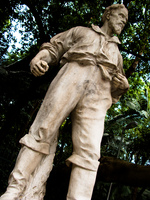
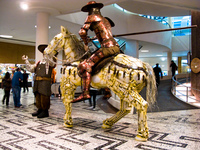
The Bandeirantes or "followers of the banner" were Portuguese colonial scouts in Brazil, members of the 16th-18th century South American slave-hunting expeditions, called Bandeiras (Portuguese for "flags"). Though their original purpose was to capture natives and force them into slavery, the Bandeirantes later began to focuse their expeditions on finding gold, silver and diamond mines. They ventured into unmapped regions in search of profit and adventure. From 1580 � 1670 the Bandeirantes focused on slave hunting, then from 1670�1750 they focused on mineral wealth. Through these expeditions, the Bandeirantes also expanded Portuguese America from the small limits of the Tordesilhas Line to roughly the same territory as current Brazil. This expansion discovered mineral wealth that made the fortune of Portugal during the 17th and 18th centuries.
The museum is internationally recognized for its collection of Western art, considered the finest in Latin America and all Southern Hemisphere. It also shelters an emphatic assemblage of Brazilian art, prints and drawings, as well as smaller collections of African and Asian art, antiquities, decorative arts, and others, amounting to more than 8,000 pieces. MASP also has one of the largest art libraries of the country. The entire collection is listed as Brazilian National Heritage.